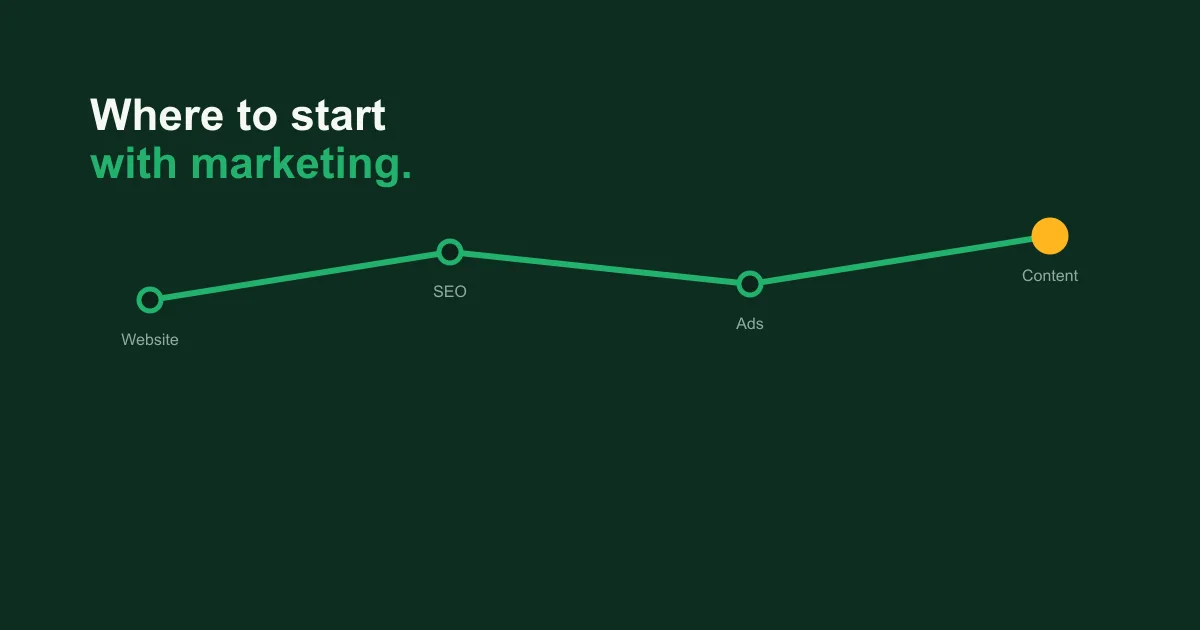
What digital marketing should a small business start with? With nine or more channels competing for attention — SEO, paid ads, social media, email, content and more — it's tempting to try everything at once, which usually means doing all of it badly. Here's a sensible order to work through instead.
Start with your website
Before spending on anything else, make sure the destination you're sending people to actually works. A slow, unclear or outdated site will undermine every other channel you invest in — traffic that lands on friction rarely converts, no matter how well it was earned. If you're not sure whether your site is holding you back, our piece on signs your website needs a redesign is a useful starting point, and web design & development covers what a properly built site should include.
Then make sure people can actually find you
Once your website works, SEO is usually the next sensible investment — it's what lets people who are already searching for what you offer find you, without paying for every single visit. It takes longer to show results than paid advertising, but it compounds, and the visibility doesn't disappear the moment you stop spending. See how long SEO realistically takes and what our SEO service involves.
If you need results faster, add paid advertising
SEO builds over months; paid advertising can put you in front of customers within days. If you need a faster read on what's working, or simply can't wait for organic results to build, running paid ads alongside SEO gives you both a quick feedback loop and a longer-term channel building in the background. Our comparison of SEO vs paid advertising covers this trade-off in more detail, and paid advertising explains how we approach it.
Use content and social media to build trust
Once people can find you, content marketing and social media help turn that visibility into trust. Useful content — genuinely answering the questions your customers already have — supports your SEO and gives people a reason to believe you know what you're talking about before they ever get in touch. Planning this with a simple content calendar makes it far easier to stay consistent. Social media extends that further, letting potential customers see evidence of your work and expertise in the places they already spend time.
Don't overlook email
Not everyone who's interested is ready to buy immediately. Email marketing lets you stay in front of people who've already shown interest — through an enquiry, a download or a newsletter sign-up — without paying to reach them again the way you would with ads. See how often you should actually be sending once you get started.
Measure everything from day one
Whatever you invest in first, make sure you can actually measure what's happening — enquiries, leads and sales, not just visits or impressions. Without proper analytics in place, it's impossible to tell which channel is genuinely working and which just feels busy. If you're running paid ads, our guide on how to know if your Google Ads are actually working walks through what to track.
A simple starting framework
- Website not converting well? Fix that first — every other channel sends traffic to it.
- Need customers urgently? Paid advertising gives the fastest feedback.
- Building for the long term? Start SEO now, because it takes months to build regardless of when you start.
- Already getting enquiries but want more trust and repeat business? Content, social and email are where to focus next.
FAQs
Can I do all of this myself?
Some elements, yes, especially early on — but each channel benefits from proper setup and ongoing attention, and trying to do everything at once with limited time is usually where small businesses lose momentum.
What if I only have budget for one channel?
Start with whichever fixes the biggest gap: a broken website undermines everything, so fix that first if it's an issue; otherwise, choose based on whether you need speed (paid advertising) or long-term compounding value (SEO).
The bottom line
There's no single right starting point for every business, but there is a sensible order: get the website working, make sure people can find you, add paid advertising if you need speed, then layer in content, social and email to build trust and stay visible. Measure all of it from the start.
Not sure where your business fits in that order? See all our services, or get in touch for a free audit and we'll help you figure out where to start.